

COOKIE POLICY
What is a cookie?
A cookie is a small file of letters and numbers that we store on your browser or the hard drive of your computer if you agree. Cookies contain information that is transferred to your computer's hard drive.
What types of cookies are used?
PACED’s website uses “analytical” cookies to track how our websites are used, including what pages people visit and what country they are visiting from. We use this information to improve our website and to keep it relevant to our users’ needs.
How to control cookies?
If you do not wish to have cookies stored on your computer or other device, you can easily change your web browser’s settings to refuse cookies. Information about deleting or controlling cookies is available at www.aboutcookies.org.
By using this website you are agreeing to the terms of this cookie policy. If you have any questions about this cookie policy, please email info@paced.org.uk
What is a cookie?
A cookie is a small file of letters and numbers that we store on your browser or the hard drive of your computer if you agree. Cookies contain information that is transferred to your computer's hard drive.
What types of cookies are used?
PACED’s website uses “analytical” cookies to track how our websites are used, including what pages people visit and what country they are visiting from. We use this information to improve our website and to keep it relevant to our users’ needs.
How to control cookies?
If you do not wish to have cookies stored on your computer or other device, you can easily change your web browser’s settings to refuse cookies. Information about deleting or controlling cookies is available at www.aboutcookies.org.
By using this website you are agreeing to the terms of this cookie policy. If you have any questions about this cookie policy, please email info@paced.org.uk
‘As I grow older, I find it more difficult to talk about myself and easier to speak with those dying’
Tamara Kvizhinadze / PACED Archive
The first guest in our Masters of Care series is Tamara Kvizhinadze, Senior Nurse at the Leliani Centre for the Elderly in Tbilisi. She has dedicated many years to palliative care—working alongside patients and their families, training nurses, and establishing care systems. Her expertise does not lie in ‘correct answers’ but in daily practice, which makes one experience and re-evaluate everything.
In a conversation with Felix Pinto-Baquerizo and Uliana Pavlovskaia from PACED, Tamara talks about her work and herself—directly, with humour, and genuine honesty. She considers how attitudes towards life and death evolve, what colleagues and patients teach her, how to avoid losing oneself, and why remaining indifferent in this profession is impossible.
We spoke with Tamara while she was on the move, returning to work after a patient’s funeral. The conversation suddenly diverged from our planned script—becoming lively and intimate—and we aimed to record it exactly as it unfolded.
Читать текст на русском
In a conversation with Felix Pinto-Baquerizo and Uliana Pavlovskaia from PACED, Tamara talks about her work and herself—directly, with humour, and genuine honesty. She considers how attitudes towards life and death evolve, what colleagues and patients teach her, how to avoid losing oneself, and why remaining indifferent in this profession is impossible.
We spoke with Tamara while she was on the move, returning to work after a patient’s funeral. The conversation suddenly diverged from our planned script—becoming lively and intimate—and we aimed to record it exactly as it unfolded.
Читать текст на русском
Preobrazhenie Hospice is part of a convent and comes under its jurisdiction. The primary management is carried out by the Mother Superior of the convent.
Today, this story might seem almost unbelievable. However, in the 1990s, the post-Soviet states—including Georgia—faced severe socio-economic crises, armed conflicts, and shortages of basic resources. These were conditions where such situations, unfortunately, could occur.
Babo (Geo. ბაბო) — a term of endearment in Georgian, derived from the words for grandfather (babua) or grandmother (bebia). In this context, it functions similarly to ‘granny’ or ‘nan’, reflecting a deep, familial-like bond between a carer and an elderly person.
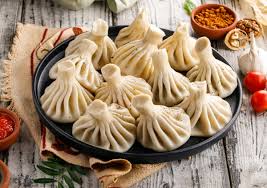
Khinkali — a traditional Georgian dumpling, usually filled with spiced meat and herbs. It is a staple of Georgian cuisine, recognised by its distinctive pleated shape and the savoury broth inside.
A psalm is a sacred song or hymn from the Book of Psalms. In the Orthodox tradition, specific psalms are recited at the bedside of a dying person to offer spiritual comfort and guide the soul in its final moments.
Felix: How did you get into medicine, and then specialise in palliative care?
Tamara: Actually, I wanted to become an archaeologist; I had no intention of entering medicine at all. But in Georgia, it often happens that you follow your relatives' advice. I performed well at school, but as soon as I graduated, they began ‘placing’ me—they enrolled me in a medical college. I am very grateful to my brother for that now. However, back then, I continued to resist; after college, I planned to apply to the history faculty. Then, a stroke of luck occurred—I met an acquaintance of my father’s who asked, ‘Do you want to work with some good people?’ I agreed, and that is how I ended up in a hospital, in the traumatology department.
By a twist of fate, I met some wonderful doctors who became my mentors. They allowed me to observe their work and taught me the most important skills: clinical thinking, planning, listening, and decision-making. They would give me books to take home, saying, ‘Here is a textbook—study.’
I also unexpectedly began palliative care in 2009. I was offered a position to substitute for a nursing care instructor who was going on maternity leave at the Preobrazhenie Hospice educational centre. I tried to object, saying I had never taught anyone before, but they persuaded me to give it a try for a month. I tried it—and I ended up staying. I taught while continuing my clinical practice. Later, I became the care coordinator at the hospice itself.
In 2012, I was offered training in Germany. I didn’t know any German, and my English was—well, so-so. But I went anyway; people helped me there and translated if I didn’t understand something. Since then, I have attended various other training courses and travelled to many places. Even now, I am considering enrolling in a psychology faculty. In short, one must always keep learning.
It is also crucial to mention that if it weren’t for my sister—if she hadn’t been in my life—I would hardly be where I am now: sitting in a parked car after a patient’s funeral, talking to you. In many ways, I owe my life to her.
She had Down’s syndrome and cerebral palsy, and throughout my childhood, I observed my mother, relatives, and friends caring for her. I lived alongside her for 13 years and didn’t even realise she was ill. To me, she seemed like an ordinary person; she just didn’t go to school and learned differently. Perhaps I simply didn’t think about it. Then, in 1989, she passed away. She was 22. Something in me must have shifted after that. It’s as if I didn’t choose palliative care myself, but was guided there, you see?
Felix: Thank you for your honesty. Many of us came to palliative care through personal stories, so of course, I understand.
Tell us more about the training centre you started working in 2009. Do you still teach there?
Tamara: I haven’t taught there for eighteen months now.
It remains the only educational centre in Georgia specifically for palliative care nurses. There are separate programmes, some courses, and related topics in therapy or care in Georgian, but very few of them.
When I first arrived there, I thought I knew everything, that I could handle it all. My first class consisted of 29 Georgian women, each with her own character. After the very first day, I thought: ‘That’s it, I’m not going back tomorrow because no one is listening to me.’ But I went back anyway. And soon, do you know what I realised?
Tamara: Actually, I wanted to become an archaeologist; I had no intention of entering medicine at all. But in Georgia, it often happens that you follow your relatives' advice. I performed well at school, but as soon as I graduated, they began ‘placing’ me—they enrolled me in a medical college. I am very grateful to my brother for that now. However, back then, I continued to resist; after college, I planned to apply to the history faculty. Then, a stroke of luck occurred—I met an acquaintance of my father’s who asked, ‘Do you want to work with some good people?’ I agreed, and that is how I ended up in a hospital, in the traumatology department.
By a twist of fate, I met some wonderful doctors who became my mentors. They allowed me to observe their work and taught me the most important skills: clinical thinking, planning, listening, and decision-making. They would give me books to take home, saying, ‘Here is a textbook—study.’
I also unexpectedly began palliative care in 2009. I was offered a position to substitute for a nursing care instructor who was going on maternity leave at the Preobrazhenie Hospice educational centre. I tried to object, saying I had never taught anyone before, but they persuaded me to give it a try for a month. I tried it—and I ended up staying. I taught while continuing my clinical practice. Later, I became the care coordinator at the hospice itself.
In 2012, I was offered training in Germany. I didn’t know any German, and my English was—well, so-so. But I went anyway; people helped me there and translated if I didn’t understand something. Since then, I have attended various other training courses and travelled to many places. Even now, I am considering enrolling in a psychology faculty. In short, one must always keep learning.
It is also crucial to mention that if it weren’t for my sister—if she hadn’t been in my life—I would hardly be where I am now: sitting in a parked car after a patient’s funeral, talking to you. In many ways, I owe my life to her.
She had Down’s syndrome and cerebral palsy, and throughout my childhood, I observed my mother, relatives, and friends caring for her. I lived alongside her for 13 years and didn’t even realise she was ill. To me, she seemed like an ordinary person; she just didn’t go to school and learned differently. Perhaps I simply didn’t think about it. Then, in 1989, she passed away. She was 22. Something in me must have shifted after that. It’s as if I didn’t choose palliative care myself, but was guided there, you see?
Felix: Thank you for your honesty. Many of us came to palliative care through personal stories, so of course, I understand.
Tell us more about the training centre you started working in 2009. Do you still teach there?
Tamara: I haven’t taught there for eighteen months now.
It remains the only educational centre in Georgia specifically for palliative care nurses. There are separate programmes, some courses, and related topics in therapy or care in Georgian, but very few of them.
When I first arrived there, I thought I knew everything, that I could handle it all. My first class consisted of 29 Georgian women, each with her own character. After the very first day, I thought: ‘That’s it, I’m not going back tomorrow because no one is listening to me.’ But I went back anyway. And soon, do you know what I realised?
I was trying to teach them things they already knew. What I needed to do first was listen to them—to discover what they knew, what they didn't, and what they wanted to learn. Only after that could I write the curriculum. You have to understand where to start.

Tamara Kvizhinadze / Photo from personal Facebook profile
My programme changed with each new intake. When I entered the classroom, I never sat apart from the students as a teacher. I always sat with them, right beside them.
You see, I was training nurses who already had an education and a diploma. And if you say to a Georgian woman, ‘Now I’m going to teach you what you don't know’—that’s it, you’ve made an enemy. But if you say, ‘Girls, there is a lot I don’t know either, but I do know a few things; tell me, what interests you?’—then everything changes. This understanding didn’t come to me immediately.
When I received the coordinator role, the nurses didn’t accept me at first either: I was taking someone else’s place, and that was painful for them.
We used to hold a general meeting every Thursday. One day, the Mother Superior suggested that each nurse write down what she disliked about Tamara. It was a real shock for me. They all began going up to the board and writing what they disliked about me, explaining why they found it difficult to accept me. At first, I wanted to take offence and leave, but I stopped myself—instead, I stood up and wrote my own weaknesses on the board as well.
If only you knew how healing that was. For fifteen years now, we have all been the closest of friends.
You see, I was training nurses who already had an education and a diploma. And if you say to a Georgian woman, ‘Now I’m going to teach you what you don't know’—that’s it, you’ve made an enemy. But if you say, ‘Girls, there is a lot I don’t know either, but I do know a few things; tell me, what interests you?’—then everything changes. This understanding didn’t come to me immediately.
When I received the coordinator role, the nurses didn’t accept me at first either: I was taking someone else’s place, and that was painful for them.
We used to hold a general meeting every Thursday. One day, the Mother Superior suggested that each nurse write down what she disliked about Tamara. It was a real shock for me. They all began going up to the board and writing what they disliked about me, explaining why they found it difficult to accept me. At first, I wanted to take offence and leave, but I stopped myself—instead, I stood up and wrote my own weaknesses on the board as well.
If only you knew how healing that was. For fifteen years now, we have all been the closest of friends.
You see, it is very important to tell the truth—both to others and to yourself.
Uliana: How has your understanding of palliative care evolved over the years?
Tamara: Throughout my youth, I believed I knew a lot and could do many things better than others. In reality, I couldn’t. I realised this when my mother died.
Tamara: Throughout my youth, I believed I knew a lot and could do many things better than others. In reality, I couldn’t. I realised this when my mother died.
Yes, I understood the medical side and knew how to provide care,
but I never truly learned how to ‘let go’.
but I never truly learned how to ‘let go’.
Only now, after years of working in palliative care, can I say that I am starting to gradually understand how it is done—and therefore, grasp what palliative care truly is.
My mother had Parkinson’s followed by dementia. She was extremely ill, and the last six weeks were particularly difficult. She experienced frequent episodes of pain... I would hold her in my arms, gently rocking her, just so she could drift off to sleep, even if only for an hour.
Back then, I had to do so much myself—talking to different people, knocking on doors, fighting for help—but they still didn't manage to prescribe proper pain relief in time. What helped was having the knowledge and support of my family, friends, and our Sisters of Mercy. I constantly think: if I hadn’t had all that, what would have happened? How do people cope when they have no help, no skills, and no access to pain relief?
And even now, it’s still the same. The treatment, the bureaucracy—it’s all the same. Unfortunately.
Felix: How can someone obtain opioid pain relief in Georgia today?
Tamara: Pain relief of that level is usually prescribed by a doctor, often an oncologist, at a primary care facility. Afterwards, with this prescription, you must visit a police station where a specialised pharmacy dispenses opioids.
Pharmacists, unfortunately, often don’t know where to obtain opioids themselves and cannot advise customers. Ambulance doctors also don't carry narcotic pain relief, apart from a few specialised teams.
I was just speaking with an acquaintance. His relative has a serious illness and is in severe pain. Their doctor told them he couldn't prescribe narcotic pain relief because it wasn't an oncological case. I had to convince him that, by law, opioids are prescribed not only for cancer but for any chronic illness.
My mother had Parkinson’s followed by dementia. She was extremely ill, and the last six weeks were particularly difficult. She experienced frequent episodes of pain... I would hold her in my arms, gently rocking her, just so she could drift off to sleep, even if only for an hour.
Back then, I had to do so much myself—talking to different people, knocking on doors, fighting for help—but they still didn't manage to prescribe proper pain relief in time. What helped was having the knowledge and support of my family, friends, and our Sisters of Mercy. I constantly think: if I hadn’t had all that, what would have happened? How do people cope when they have no help, no skills, and no access to pain relief?
And even now, it’s still the same. The treatment, the bureaucracy—it’s all the same. Unfortunately.
Felix: How can someone obtain opioid pain relief in Georgia today?
Tamara: Pain relief of that level is usually prescribed by a doctor, often an oncologist, at a primary care facility. Afterwards, with this prescription, you must visit a police station where a specialised pharmacy dispenses opioids.
Pharmacists, unfortunately, often don’t know where to obtain opioids themselves and cannot advise customers. Ambulance doctors also don't carry narcotic pain relief, apart from a few specialised teams.
I was just speaking with an acquaintance. His relative has a serious illness and is in severe pain. Their doctor told them he couldn't prescribe narcotic pain relief because it wasn't an oncological case. I had to convince him that, by law, opioids are prescribed not only for cancer but for any chronic illness.
And that’s how it is—the law exists, but the doctors are unaware of it.
We have protocols, resolutions, and guidelines in Georgian; everything is available. But you need to read it all, you see.
Uliana: What qualities do you believe are important for a nurse? Particularly a palliative care nurse?
Tamara: This is a difficult subject. A ‘good nurse’ is typically seen as someone skilled at setting up IV drips. But that isn't sufficient.
Let me give you an example. Long ago, I had a neighbour—a man with a drug addiction, but otherwise a good person. And another neighbour was an intensivist who, if he couldn't insert a central catheter, would call the neighbour with addiction for help.
Uliana: What qualities do you believe are important for a nurse? Particularly a palliative care nurse?
Tamara: This is a difficult subject. A ‘good nurse’ is typically seen as someone skilled at setting up IV drips. But that isn't sufficient.
Let me give you an example. Long ago, I had a neighbour—a man with a drug addiction, but otherwise a good person. And another neighbour was an intensivist who, if he couldn't insert a central catheter, would call the neighbour with addiction for help.
I always say: you can be a good practitioner, but without theory or knowledge,
it means nothing at all.
it means nothing at all.
It is also important to be able to empathise. I teach it like this: when you are positioning a patient, lie down exactly as you would place the patient. Feel where it’s uncomfortable, where it hurts, and where there is discomfort. Then you will understand what needs to be changed.
The issue is that nurses often merely follow orders. They don’t make decisions; everything needs to be coordinated, asked for, or called in.
In palliative care, the situation is even more desperate. An attitude surfaces: ‘Well, what can we do? He’s dying anyway.’ This discrimination based on diagnosis or age infuriates me.
The issue is that nurses often merely follow orders. They don’t make decisions; everything needs to be coordinated, asked for, or called in.
In palliative care, the situation is even more desperate. An attitude surfaces: ‘Well, what can we do? He’s dying anyway.’ This discrimination based on diagnosis or age infuriates me.
An elderly person arrives and is told, ‘Well, you’ve already lived your life.’
It’s a disaster.
At the same time, we have capable nurses. They possess excellent practical skills but lack theoretical thinking and initiative. They often hesitate to say: ‘I think we should do it this way.’ You don't even need to read complex books for that; you simply need to think. I used to be afraid of taking responsibility myself because, when you suggest something, you are accountable for it.
At the same time, we have capable nurses. They possess excellent practical skills but lack theoretical thinking and initiative. They often hesitate to say: ‘I think we should do it this way.’ You don't even need to read complex books for that; you simply need to think. I used to be afraid of taking responsibility myself because, when you suggest something, you are accountable for it.
Generally, any modifications to the system should begin with you.
It's important to be able to admit your mistakes, to voice them to yourself and to those around you—just like that, out loud. You wouldn’t believe how much it inspires people. If you do this, people begin to trust you, trust your expertise, ask questions, and truly learn from you.
This is how I teach my nurses. At first, they didn’t want to do anything or make decisions on their own; now they ask me what materials they should read. They have learned to describe their actions and analyse them. This is extremely important.
This is how I teach my nurses. At first, they didn’t want to do anything or make decisions on their own; now they ask me what materials they should read. They have learned to describe their actions and analyse them. This is extremely important.

Tamara Kvizhinadze / PACED Archive
Any nursing care starts with a plan.
A plan can change as you progress: something might not work here, something may have altered there—everything must be documented, considered, and kept in view. Only then can we discuss quality care.
I don’t enjoy paperwork myself, but I understand it’s necessary, so I write alongside my nurses. I try not to take documents home but to describe everything right there on the spot. They learn from me and begin recording everything themselves.
And do you know what the most wonderful thing is? Later, if they move to other organisations, they teach other nurses to do the same. My knowledge continues to spread without my further involvement. That is incredibly valuable.
I don’t enjoy paperwork myself, but I understand it’s necessary, so I write alongside my nurses. I try not to take documents home but to describe everything right there on the spot. They learn from me and begin recording everything themselves.
And do you know what the most wonderful thing is? Later, if they move to other organisations, they teach other nurses to do the same. My knowledge continues to spread without my further involvement. That is incredibly valuable.
Besides, while you are teaching, you don't forget anything yourself, and you continue learning—that’s why teaching is so important. I am very grateful to my students for this experience.

Tamara Kvizhinadze / PACED Archive
Felix: If you don't mind, could you share a story from your practice—perhaps a recent one?
Tamara: Two weeks ago, a patient of mine passed away... she was more than just a patient to me—she was like a grandmother to me, babo. She was 94 and would have turned 95 in May. She had lived in another country, where she suffered a stroke, and then her relatives transported her to us. Her condition was serious: she couldn't swallow, speak, or walk.
When a person is admitted, I always begin by asking: what was their life like, what did they love, what did they do, and what was their character like? Well, they told me she had a difficult character and enjoyed a drink to set the mood. She didn't have an alcohol dependency, but she liked a drink.
And do you know what I did first? I checked her temperature and blood pressure—everything was normal. I took a small two-millilitre syringe—I decided she could swallow 2 millilitres, and if there was no aspiration, we could cautiously continue—and I filled it with cognac.
She drank the cognac—there was no aspiration. And a relationship formed between us... trust, you see? And so, bit by bit, we began to work with her. Gradually, she started to walk and speak. Her character reminded me so much of my mother—she was always joking, and she could certainly hold her own with strong language.
Later, unfortunately, she developed arterial stenosis, and her condition worsened considerably. She had two daughters—one had already died, and the other lives abroad—and grandchildren, two of whom were in Georgia. They loved their grandmother very much; they visited her often and cared for her with great devotion. I knew it would be difficult for them to let her go.
Then, one Saturday, I received a call: ‘Come quickly, grandmother is very poorly.’ I went to Leliani, entered her room, and realised that it was time; her hour had come. I had to do something. She was a very religious woman. So I began to recite a psalm over her—the one read when someone is dying.
I was reading and crying; I couldn't finish. Then I realised that I, too, could not accept this death. I couldn't stay. I went home. Twenty minutes later, she died. And I couldn't even go back. Usually, I attend memorial services, but this time I couldn't bring myself to go.
Tamara: Two weeks ago, a patient of mine passed away... she was more than just a patient to me—she was like a grandmother to me, babo. She was 94 and would have turned 95 in May. She had lived in another country, where she suffered a stroke, and then her relatives transported her to us. Her condition was serious: she couldn't swallow, speak, or walk.
When a person is admitted, I always begin by asking: what was their life like, what did they love, what did they do, and what was their character like? Well, they told me she had a difficult character and enjoyed a drink to set the mood. She didn't have an alcohol dependency, but she liked a drink.
And do you know what I did first? I checked her temperature and blood pressure—everything was normal. I took a small two-millilitre syringe—I decided she could swallow 2 millilitres, and if there was no aspiration, we could cautiously continue—and I filled it with cognac.
She drank the cognac—there was no aspiration. And a relationship formed between us... trust, you see? And so, bit by bit, we began to work with her. Gradually, she started to walk and speak. Her character reminded me so much of my mother—she was always joking, and she could certainly hold her own with strong language.
Later, unfortunately, she developed arterial stenosis, and her condition worsened considerably. She had two daughters—one had already died, and the other lives abroad—and grandchildren, two of whom were in Georgia. They loved their grandmother very much; they visited her often and cared for her with great devotion. I knew it would be difficult for them to let her go.
Then, one Saturday, I received a call: ‘Come quickly, grandmother is very poorly.’ I went to Leliani, entered her room, and realised that it was time; her hour had come. I had to do something. She was a very religious woman. So I began to recite a psalm over her—the one read when someone is dying.
I was reading and crying; I couldn't finish. Then I realised that I, too, could not accept this death. I couldn't stay. I went home. Twenty minutes later, she died. And I couldn't even go back. Usually, I attend memorial services, but this time I couldn't bring myself to go.
In that moment, I felt for myself what I had always taught my nurses: care for them,
but maintain a distance.
but maintain a distance.
It is much more difficult than it appears. This time, I didn't succeed—it felt as though I was losing my mother for the second time. However, I am also thankful for the experience, as she taught me a great deal. She introduced me to new approaches to post-stroke care.
That is the essence of practice.
Pause at any time and reflect. See the world through the patient's eyes. Then view it from a medic's perspective. Most importantly, you must love what you do. Without that, nothing will succeed.
Uliana: How do you handle such an overwhelming amount of emotion? Do you have your own method of easing tension or dealing with grief?
Tamara: There are now far more medicines in my first-aid kit than there used to be. And that isn't just due to age. Of course, work also plays its part. It is essential—you must look after yourself.
That is the essence of practice.
Pause at any time and reflect. See the world through the patient's eyes. Then view it from a medic's perspective. Most importantly, you must love what you do. Without that, nothing will succeed.
Uliana: How do you handle such an overwhelming amount of emotion? Do you have your own method of easing tension or dealing with grief?
Tamara: There are now far more medicines in my first-aid kit than there used to be. And that isn't just due to age. Of course, work also plays its part. It is essential—you must look after yourself.
Previously, I always put work first. That's wrong. You must prioritise yourself.

Tamara Kvizhinadze / Photo from personal Facebook profile
I used to argue with my family and my husband because I kept saying: ‘I’m tired, you don't understand, my job is like this...’ Then I realised he also works but doesn't complain all the time.
Saturday and Sunday used to be my work days. Not any longer. Now, on weekends, I am at home unless there is an emergency. I have more time now, and I find I accomplish more—both at work and at home.
I also realised one thing: if you think that no one can do a job better than you, it means you aren't doing the most important thing—you aren't teaching others.
Saturday and Sunday used to be my work days. Not any longer. Now, on weekends, I am at home unless there is an emergency. I have more time now, and I find I accomplish more—both at work and at home.
I also realised one thing: if you think that no one can do a job better than you, it means you aren't doing the most important thing—you aren't teaching others.
You need to trust people and give them the chance to learn.
I lost a lot in life because of my character. But then I learned to thank God. Life is very hard without faith. It is hard for me; I don't know about others, but that is what helps me.
And I have my own ways of healing. Getting behind the wheel—and God forbid anyone is with me at that moment: I have the music blasting at full volume, very loud. I walk a lot—it helps me breathe. And most importantly—visiting my granddaughter, playing with her for an hour or so, makes me forget everything: the morning's blood pressure, the swollen legs, the fact I could barely get out of bed, and that things went wrong at work.
That is my therapy. Everyone must find such things for themselves. Everyone has their own. And, thank God, I have friends. One of my close friends is a psychologist; she helps me a lot. Because in the 21st century, faith is important, but you cannot manage without a psychologist either.
In short, one must not be afraid to live. Not afraid to fall asleep, not afraid to wake up. Not afraid to speak of one's sins and to analyse oneself.
I lost a lot in life because of my character. But then I learned to thank God. Life is very hard without faith. It is hard for me; I don't know about others, but that is what helps me.
And I have my own ways of healing. Getting behind the wheel—and God forbid anyone is with me at that moment: I have the music blasting at full volume, very loud. I walk a lot—it helps me breathe. And most importantly—visiting my granddaughter, playing with her for an hour or so, makes me forget everything: the morning's blood pressure, the swollen legs, the fact I could barely get out of bed, and that things went wrong at work.
That is my therapy. Everyone must find such things for themselves. Everyone has their own. And, thank God, I have friends. One of my close friends is a psychologist; she helps me a lot. Because in the 21st century, faith is important, but you cannot manage without a psychologist either.
In short, one must not be afraid to live. Not afraid to fall asleep, not afraid to wake up. Not afraid to speak of one's sins and to analyse oneself.
Not afraid to say ‘no’. It doesn't make you a bad person; it makes you free.
Sadly, I only realised this after I turned fifty.
Sadly, I only realised this after I turned fifty.
I just remembered something else about that patient I’ve told you about before: she was lying in bed, and I lay down beside her—I often do that, I lie down with patients, and we chat. An interesting point, by the way—I don't smell anything, you know, what people call the ‘smell of old age’ or the ‘smell of illness’. If a person is clean and well cared for, there is no smell, though others say there is; I don't sense it. Yet on the street, I am very sensitive to all kinds of smells, but at work, not at all.
So, we were lying there together. She was speaking with difficulty, but she was speaking. And we had this dialogue:
She said: ‘I’m going to die.’ And I said: ‘Babo, I will die one day too. I don't know when, in 10 or 20 years. I’d like it to be in 40, like you, but I don't know.’ And do you know what she said? ‘When you die, I will be there to look after you.’
Do you understand what that means? It isn't just gratitude; it's a desire to give back to you what you gave her. I still find it hard to comprehend. That is why I say: thank you to all those who have passed on.
So, we were lying there together. She was speaking with difficulty, but she was speaking. And we had this dialogue:
She said: ‘I’m going to die.’ And I said: ‘Babo, I will die one day too. I don't know when, in 10 or 20 years. I’d like it to be in 40, like you, but I don't know.’ And do you know what she said? ‘When you die, I will be there to look after you.’
Do you understand what that means? It isn't just gratitude; it's a desire to give back to you what you gave her. I still find it hard to comprehend. That is why I say: thank you to all those who have passed on.

Tamara Kvizhinadze with colleagues Manana Kometiani and Rodami Gogokhia during the PACED Leadership School in Kyrgyzstan/ PACED Archive
Question 1: What does palliative care mean to you in a few words?
Tamara: Palliative care is about supporting a person and yourself to learn how to live—not just avoiding pain, fear, remorse, or feelings of loneliness.
Question 2: What brief piece of advice would you offer to a young nurse beginning their journey in palliative care?
Tamara: You must, absolutely must, try it out before you begin—volunteer somewhere for at least a week, or even just a day. You need to understand where you are heading and whether it suits you.
And it’s important: you get up in the morning, look at yourself in the mirror, learn to smile confidently—and then carry on. I always tell the girls: don't be afraid to smile. I had a period after an operation when I had no teeth at all. I looked like a ninety-year-old Mother Superior. But I smiled anyway. No one notices your teeth, you see? When a person smiles, it is felt. And you should look not at the smile, but right into the eyes.
Question 3: If you could make one wish, what would it be?
Tamara: I wanted very much to be a mother; unfortunately, that didn't happen for me. Now, I have one wish: that I don't develop dementia. That is probably due to my character and everything I have seen.
And I have another dream: I really want to visit Cuba. I don't know why, but I very much want to. I hope I’ll go one day.
Question 4: Are you afraid of dying?
Tamara: Not anymore. I don't want to die yet, but as for being afraid—I’m not. When I think about death now, I feel more pain for those who will be left behind than fear for myself. Because I already have so many people there, it certainly won't be boring.
And there is one more thing I fear: that by the time I die, cremation will have become the norm. I don't want that. I want to be laid to rest in the ground.
Question 5: What is your favourite dish?
Tamara: I love everything. I’m a real glutton if given half a chance. But what I love most every day are apples. I adore apples. I also love khinkali. Generally, I love everything. But apples come first.
...apples and my husband. Especially after eating an apple. I’m joking, of course—my husband is in first place.
Tamara: Palliative care is about supporting a person and yourself to learn how to live—not just avoiding pain, fear, remorse, or feelings of loneliness.
Question 2: What brief piece of advice would you offer to a young nurse beginning their journey in palliative care?
Tamara: You must, absolutely must, try it out before you begin—volunteer somewhere for at least a week, or even just a day. You need to understand where you are heading and whether it suits you.
And it’s important: you get up in the morning, look at yourself in the mirror, learn to smile confidently—and then carry on. I always tell the girls: don't be afraid to smile. I had a period after an operation when I had no teeth at all. I looked like a ninety-year-old Mother Superior. But I smiled anyway. No one notices your teeth, you see? When a person smiles, it is felt. And you should look not at the smile, but right into the eyes.
Question 3: If you could make one wish, what would it be?
Tamara: I wanted very much to be a mother; unfortunately, that didn't happen for me. Now, I have one wish: that I don't develop dementia. That is probably due to my character and everything I have seen.
And I have another dream: I really want to visit Cuba. I don't know why, but I very much want to. I hope I’ll go one day.
Question 4: Are you afraid of dying?
Tamara: Not anymore. I don't want to die yet, but as for being afraid—I’m not. When I think about death now, I feel more pain for those who will be left behind than fear for myself. Because I already have so many people there, it certainly won't be boring.
And there is one more thing I fear: that by the time I die, cremation will have become the norm. I don't want that. I want to be laid to rest in the ground.
Question 5: What is your favourite dish?
Tamara: I love everything. I’m a real glutton if given half a chance. But what I love most every day are apples. I adore apples. I also love khinkali. Generally, I love everything. But apples come first.
...apples and my husband. Especially after eating an apple. I’m joking, of course—my husband is in first place.
CHANGEMAKERS