

COOKIE POLICY
What is a cookie?
A cookie is a small file of letters and numbers that we store on your browser or the hard drive of your computer if you agree. Cookies contain information that is transferred to your computer's hard drive.
What types of cookies are used?
PACED’s website uses “analytical” cookies to track how our websites are used, including what pages people visit and what country they are visiting from. We use this information to improve our website and to keep it relevant to our users’ needs.
How to control cookies?
If you do not wish to have cookies stored on your computer or other device, you can easily change your web browser’s settings to refuse cookies. Information about deleting or controlling cookies is available at www.aboutcookies.org.
By using this website you are agreeing to the terms of this cookie policy. If you have any questions about this cookie policy, please email info@paced.org.uk
What is a cookie?
A cookie is a small file of letters and numbers that we store on your browser or the hard drive of your computer if you agree. Cookies contain information that is transferred to your computer's hard drive.
What types of cookies are used?
PACED’s website uses “analytical” cookies to track how our websites are used, including what pages people visit and what country they are visiting from. We use this information to improve our website and to keep it relevant to our users’ needs.
How to control cookies?
If you do not wish to have cookies stored on your computer or other device, you can easily change your web browser’s settings to refuse cookies. Information about deleting or controlling cookies is available at www.aboutcookies.org.
By using this website you are agreeing to the terms of this cookie policy. If you have any questions about this cookie policy, please email info@paced.org.uk
‘Isolation is one of the main risks of burnout and of what I call vitrification — the process by which a specialist’s mindset becomes rigid’
Yeva Asribabayan is the head of the psychosocial service in the palliative care department at the V.A. Fanarjian National Centre of Oncology in Yerevan, and is also a practising psycho-oncologist and lecturer. Eva has realised her primary professional dream: to create a fully fledged, protocol-driven psychological support team for terminally ill patients and their families in Armenia.
In this new interview for the Masters of Care series, Eva and her colleagues — clinical psychologists Sofya Sahakyan, Merine Babayan, and Yeva Ghukasyan — speak with Ksenia Pominova and Felix Pinto-Baquerizo from the PACED team about the rewards of ten years of advocacy, why palliative care is the ultimate training for professional ego, how the team delivers ‘seamless’ family support, and why academic research underpins palliative care development. This is an honest and profound conversation about overcoming isolation, the cultural nuances of Armenia, and where the team finds renewed purpose every day.
Читать на русском
In this new interview for the Masters of Care series, Eva and her colleagues — clinical psychologists Sofya Sahakyan, Merine Babayan, and Yeva Ghukasyan — speak with Ksenia Pominova and Felix Pinto-Baquerizo from the PACED team about the rewards of ten years of advocacy, why palliative care is the ultimate training for professional ego, how the team delivers ‘seamless’ family support, and why academic research underpins palliative care development. This is an honest and profound conversation about overcoming isolation, the cultural nuances of Armenia, and where the team finds renewed purpose every day.
Читать на русском
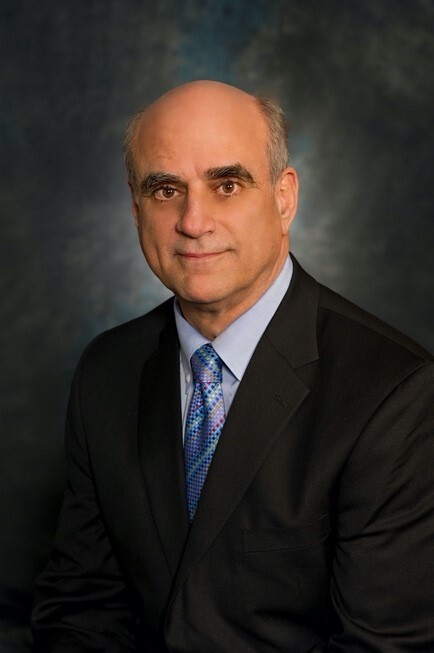
Stephen R. Connor — world-renowned expert, researcher, and Executive Director of the Worldwide Hospice Palliative Care Alliance (WHPCA). For over 40 years, he has led the implementation of hospice services and the development of international palliative care standards.
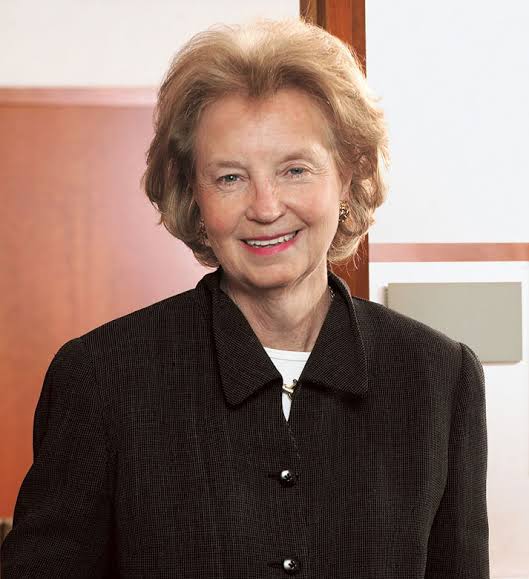
Kathleen M. Foley — distinguished American neurologist and one of the world's leading experts in pain management and palliative care. Professor of Neurology at Cornell University, former Director of the Project on Death in America, WHO expert, and author of international guidelines for cancer pain relief.
In the Armenian grading system, 20 is the highest possible mark.
Sevan — a town in the Gegharkunik Province of Armenia, located on the shores of the high-altitude Lake Sevan (approximately 60 km north-east of Yerevan) and with a population of around 19,000.
SPIKES — an international step-by-step protocol and communication framework used by medical professionals to convey bad news (such as serious diagnoses or prognoses) to patients and their families in a structured, compassionate manner.
Supervision — a key method for professional development and support used by specialists (such as psychologists, psychotherapists, and social workers). It involves reviewing complex clinical cases within a professional circle, under the guidance of a more experienced colleague (a supervisor), to analyse the therapeutic process, identify overlooked errors, and prevent professional burnout.
Dolma (Tolma) — a traditional dish in Armenian and Middle Eastern cuisine, consisting of a filling of minced meat (typically beef, pork, or lamb) mixed with rice and herbs, then wrapped in vine leaves.
Gata — a traditional Armenian pastry, typically shaped as a round, sweet bread or cake. The classic filling (khoriz) is made from clarified butter, flour, and icing sugar, occasionally flavoured with vanilla or walnuts. Dough recipes and decorative surface patterns vary by region in Armenia.
- Yeva Asribabayan
- Sofya Sahakyan
- Yeva Ghukasyan
- Merine Babayan

Yeva Asribabayan, clinical psychologist, psychotherapist / Photo from personal archive
Ksenia: Question for Yeva Asribabayan — tell us a little about yourself and your professional journey: how did you enter the profession, how did you decide to become a psychologist, and how did you become the head of the psychosocial service?
Yeva A.: I entered the profession intuitively. From the eighth grade, I already knew what I wanted to become. My father supported me greatly in this. And it was my father who indirectly led me into oncology: he had lung cancer and passed away when I was 17 years old.
I was called to his side shortly before he died, and thanks to that, I had the chance to spend his final days with him. I realised that everything could have been different, because at 17 you want to go out and socialise rather than sit in a hospital ward. Being together until the very end helped me immensely to process my grief afterwards. It was then that I decided that people should not die alone. Later, at university, I conducted various studies on this topic.
Then, together with friends and colleagues, we founded the Association of Psycho-Oncologists. Our main goal at the time was to raise awareness in society. We even had a grand, noble dream of opening a hospice, which, however, did not materialise. Gradually, we began to integrate into existing structures: we met doctors and systematically explained that palliative care is not merely a ‘good deed’ or pure compassion, but a system, a profession, and a body of scientific research.
I have been working in various hospitals for quite a long time now. Let me tell you about my current workplace: in 2022, a palliative care department opened at the National Centre of Oncology. This is not a hospice but a hospital-based palliative service, with distinct features given its embeddedness within the hospital system. However, we try to incorporate as much as possible of the hospice holistic approach.
Prior to this, I worked for a long time at another hospital, where I was the only psychologist. I had wonderful relationships with my colleagues, but at a certain point I still decided to leave, as working alone without a team is extremely difficult. I was planning to go into private practice, but just as I left that hospital, I received an offer from the National Centre of Oncology and simply could not refuse. As I mentioned, working in palliative care has long been a big dream of mine.
I began assembling a team
Yeva A.: I entered the profession intuitively. From the eighth grade, I already knew what I wanted to become. My father supported me greatly in this. And it was my father who indirectly led me into oncology: he had lung cancer and passed away when I was 17 years old.
I was called to his side shortly before he died, and thanks to that, I had the chance to spend his final days with him. I realised that everything could have been different, because at 17 you want to go out and socialise rather than sit in a hospital ward. Being together until the very end helped me immensely to process my grief afterwards. It was then that I decided that people should not die alone. Later, at university, I conducted various studies on this topic.
Then, together with friends and colleagues, we founded the Association of Psycho-Oncologists. Our main goal at the time was to raise awareness in society. We even had a grand, noble dream of opening a hospice, which, however, did not materialise. Gradually, we began to integrate into existing structures: we met doctors and systematically explained that palliative care is not merely a ‘good deed’ or pure compassion, but a system, a profession, and a body of scientific research.
I have been working in various hospitals for quite a long time now. Let me tell you about my current workplace: in 2022, a palliative care department opened at the National Centre of Oncology. This is not a hospice but a hospital-based palliative service, with distinct features given its embeddedness within the hospital system. However, we try to incorporate as much as possible of the hospice holistic approach.
Prior to this, I worked for a long time at another hospital, where I was the only psychologist. I had wonderful relationships with my colleagues, but at a certain point I still decided to leave, as working alone without a team is extremely difficult. I was planning to go into private practice, but just as I left that hospital, I received an offer from the National Centre of Oncology and simply could not refuse. As I mentioned, working in palliative care has long been a big dream of mine.
I began assembling a team
It is impossible to develop a psychological palliative service without support from medical personnel and management, probably from management first and foremost.
Naturally, doctors who had not previously worked with psychologists did not understand us at first. In this huge hospital, there had been a single psychologist for the entire institution for years, and suddenly we were there in such numbers. They used to say: ‘Why do we need so many psychologists?’ That changed when they began to see real results and to see how even their own lives were changing.
For those who want to become a palliative psychologist or a psycho-oncologist, it is crucial to understand that you will not play a leading role here. It is a wonderful exercise for the ego, because this work is not about you — it is about the team.
Often, even the patient does not want to see you. To them, a psychologist is a ‘weak link’ — after all, you cannot refuse a doctor or a nurse, but you can refuse a psychologist. That is completely normal and human. People do not come to a hospital to work with psychologists; they come for medical treatment. We are secondary assistants, often invisible and unnoticed, and it is important to recognise this in advance.
If few people in society as a whole seek psychological help, then in a palliative care department, where our work is genuinely needed, we certainly cannot rely on a patient's direct request. We must come forward ourselves — explaining and demonstrating why it matters.
Another significant part of my life is teaching. In 2016, my colleagues from Yerevan State University and I, with support from the Open Society Foundations, developed a course in palliative psychology. We were assisted by Stephen Connor and Kathleen Foley. Later, I developed a psychology course for somatic departments. I believe it is essential to pass on to psychology students the experience of working not only with mental illnesses but also with somatic patients.
If few people in society as a whole seek psychological help, then in a palliative care department, where our work is genuinely needed, we certainly cannot rely on a patient's direct request. We must come forward ourselves — explaining and demonstrating why it matters.
Another significant part of my life is teaching. In 2016, my colleagues from Yerevan State University and I, with support from the Open Society Foundations, developed a course in palliative psychology. We were assisted by Stephen Connor and Kathleen Foley. Later, I developed a psychology course for somatic departments. I believe it is essential to pass on to psychology students the experience of working not only with mental illnesses but also with somatic patients.

Sofya Sahakyan, clinical psychologist, psychotherapist / Photo from personal archive
Ksenia: Yeva, thank you very much! Sofya, now please tell us about your journey: how did you become a psychologist, and how did you come to work in palliative care?
Sofya: I came to psychology in a rather unexpected way, even to myself. Until I was 16, I had no idea what I wanted to become. My first encounter with the field was with my school psychologist — and back then, I could never have imagined that I would one day choose this profession.
To my surprise, I passed the entrance exams and enrolled in the Psychology Department at Yerevan State University. I was only 17. Being cautious by nature, I spent a long time wondering whether I would be able to work in this field and cope with such a high level of responsibility. But my fascination with psychology proved stronger than my fears. I decided: I would go to university, and then we’d see.
In my second year, I met truly phenomenal lecturers: Susan Sargsyan and Vladimir Mikaelyan. Thanks to them, I fell in love with psychology. They offered us immense support, despite our youth, and instilled in us the belief that we could achieve anything.
Regrettably, both of these lecturers passed away in 2020: Vladimir Akopovich from cancer and Susan Feliksovna from COVID-19. It was a tremendous shock to all of us. After that, I decided that, since I had been given the opportunity to learn from such people, I had a duty to step up, take responsibility, and carry on their work. That was what pushed me forward.
After that, I spent several years building my clinical practice. Among other things, I worked on the wonderful Robin the Robot project. An Armenian technology company developed a small, child-like robot designed to provide psychological support for children across various medical centres. In Yerevan, it was deployed in two locations: one at the Yeolyan Haematology and Oncology Centre, where children with cancer receive treatment, and the other at the Nork-Marash Medical Centre, which cares for children with cardiovascular issues. It was then that I first encountered oncology. It was emotionally challenging, but it also gave me a sense that I could offer something meaningful to these children. It is a fantastic project.
Later, while studying for my master's degree, I began to think seriously about volunteering. I followed Yeva Asribabayan on Instagram, and she posted about recruiting volunteers for the palliative centre. It took me two months to gather the courage to apply.
Sofya: I came to psychology in a rather unexpected way, even to myself. Until I was 16, I had no idea what I wanted to become. My first encounter with the field was with my school psychologist — and back then, I could never have imagined that I would one day choose this profession.
To my surprise, I passed the entrance exams and enrolled in the Psychology Department at Yerevan State University. I was only 17. Being cautious by nature, I spent a long time wondering whether I would be able to work in this field and cope with such a high level of responsibility. But my fascination with psychology proved stronger than my fears. I decided: I would go to university, and then we’d see.
In my second year, I met truly phenomenal lecturers: Susan Sargsyan and Vladimir Mikaelyan. Thanks to them, I fell in love with psychology. They offered us immense support, despite our youth, and instilled in us the belief that we could achieve anything.
Regrettably, both of these lecturers passed away in 2020: Vladimir Akopovich from cancer and Susan Feliksovna from COVID-19. It was a tremendous shock to all of us. After that, I decided that, since I had been given the opportunity to learn from such people, I had a duty to step up, take responsibility, and carry on their work. That was what pushed me forward.
After that, I spent several years building my clinical practice. Among other things, I worked on the wonderful Robin the Robot project. An Armenian technology company developed a small, child-like robot designed to provide psychological support for children across various medical centres. In Yerevan, it was deployed in two locations: one at the Yeolyan Haematology and Oncology Centre, where children with cancer receive treatment, and the other at the Nork-Marash Medical Centre, which cares for children with cardiovascular issues. It was then that I first encountered oncology. It was emotionally challenging, but it also gave me a sense that I could offer something meaningful to these children. It is a fantastic project.
Later, while studying for my master's degree, I began to think seriously about volunteering. I followed Yeva Asribabayan on Instagram, and she posted about recruiting volunteers for the palliative centre. It took me two months to gather the courage to apply.

Merine Babayanи, Yeva Ghukasyan, Sofya Sahakyan and Ksenia Pominova (PACED)/ Photo from personal archive
Ksenia: Were you acquainted with Yeva before then, or did you simply follow her on social media?
Sofya: I simply followed her, although she once examined us at university. I am not sure whether she remembers it; most likely not.
Yeva A.: I tend to block out such terrifying moments from my memory (laughs).
Sofya: Quite understandably (laughs). I received either 19 or 20 points back then and was absolutely delighted. Anyway, when I finally arrived for the volunteer interview, I fell in love with the centre straight away. It was fairly easy for me to adapt. Of course, the structure and specifics here are entirely different, but the core theme — supporting people with oncological conditions — aligned with my past experience.
A few months later, Yeva called me to offer me a job.
Sofya: I simply followed her, although she once examined us at university. I am not sure whether she remembers it; most likely not.
Yeva A.: I tend to block out such terrifying moments from my memory (laughs).
Sofya: Quite understandably (laughs). I received either 19 or 20 points back then and was absolutely delighted. Anyway, when I finally arrived for the volunteer interview, I fell in love with the centre straight away. It was fairly easy for me to adapt. Of course, the structure and specifics here are entirely different, but the core theme — supporting people with oncological conditions — aligned with my past experience.
A few months later, Yeva called me to offer me a job.
My immediate reaction was: ‘Oh, I can’t, I won’t manage! I am still far too young as a psychologist; I need years of training.’ But she offered me immense support then, and my colleagues helped a lot as well. That is how I began working here.

Merine Babayanи, clinical psychologist, psychotherapist / Photo from personal archive
Ksenia: What a pleasure to hear about such wonderful teachers. Thank you, Sofya. Merine, could you share your story with us?
Merine: What brought me into this profession? I think two things played a role. The first was that I was a difficult teenager, always saying that nobody understood me: neither my parents nor society. I lived in Sevan, a small town, and there was not a single psychologist in either the medical or educational institutions. I developed this belief: if only there were psychologists, we teenagers would have somewhere to turn.
The second push also came from adolescence. I do not know if you remember, but there was a detective series called The Mentalist. The main character could tell what kind of person was in front of him and whether they were telling the truth, just from their facial expressions and verbal and non-verbal cues. I romanticised this character and the profession itself — I wanted to do precisely that.
These two factors led me to psychology.
Merine: What brought me into this profession? I think two things played a role. The first was that I was a difficult teenager, always saying that nobody understood me: neither my parents nor society. I lived in Sevan, a small town, and there was not a single psychologist in either the medical or educational institutions. I developed this belief: if only there were psychologists, we teenagers would have somewhere to turn.
The second push also came from adolescence. I do not know if you remember, but there was a detective series called The Mentalist. The main character could tell what kind of person was in front of him and whether they were telling the truth, just from their facial expressions and verbal and non-verbal cues. I romanticised this character and the profession itself — I wanted to do precisely that.
These two factors led me to psychology.
Of course, as soon as I started my first year, I quickly realised that real psychology had nothing in common with the methods of the main character in The Mentalist. By then, I had already fallen in love with the field and did not want to leave it.
After earning a bachelor's degree, I enrolled in a master's programme at Yerevan State University, specialising in clinical psychology and psychotherapy. Above all, I wanted to pursue clinical psychology. I graduated with my master's degree in 2020, at the height of COVID-19, and began working at the intersection of clinical and educational psychology. My role involved assessing children's needs, adapting school curricula, and providing psychological counselling to children with special needs and their families.
Yet my love for clinical psychology never went away. I also wanted to return to working with adults. Currently, I work with adults with oncological conditions. I do not think I could work with children with cancer; that would be too difficult for me. I feel my boundaries very clearly here.
I learned about palliative care from Yeva Asribabayan, who lectured on the subject during our master's programme. A few years after graduating, I wrote to Yeva to say I wanted to volunteer in the palliative care service, and Yeva took me on.
At present, I do not work in the palliative department like Sofya and Yeva Ghukasyan. I primarily work with patients undergoing chemotherapy. However, when my patients finish chemotherapy and are transferred to the palliative department — or, conversely, are transferred from the palliative department to the oncology department — I always follow their care. Teamwork is extremely important to us; we always decide together which specialist will work with a specific patient.
Yet my love for clinical psychology never went away. I also wanted to return to working with adults. Currently, I work with adults with oncological conditions. I do not think I could work with children with cancer; that would be too difficult for me. I feel my boundaries very clearly here.
I learned about palliative care from Yeva Asribabayan, who lectured on the subject during our master's programme. A few years after graduating, I wrote to Yeva to say I wanted to volunteer in the palliative care service, and Yeva took me on.
At present, I do not work in the palliative department like Sofya and Yeva Ghukasyan. I primarily work with patients undergoing chemotherapy. However, when my patients finish chemotherapy and are transferred to the palliative department — or, conversely, are transferred from the palliative department to the oncology department — I always follow their care. Teamwork is extremely important to us; we always decide together which specialist will work with a specific patient.
Merine Babayanи, Yeva Ghukasyan, Sofya Sahakyan and their colleagues at a conference / Photo from personal archive

Yeva Ghukasyan, clinical psychologist, psychotherapist / Photo from personal archive
Ksenia: That is a very thoughtful, gentle approach to the patient. Thank you very much, Merine. I have one follow-up question. You mentioned that you were a difficult teenager — I imagine it was not easy for your parents. How did they respond to your choice of profession?
Merine: Very well; they trusted and believed in me. That was invaluable.
Ksenia: Please convey my deepest respect to your parents. Yeva Ghukasyan, please tell us how you came to work in the palliative service?
Yeva G.: Ever since childhood, I have been interested in how people cope with crises and difficult life situations, which is why I chose psychology. While at university, I became interested in supporting people with severe illnesses — both my bachelor's and master's theses focused on psychological support for cancer patients. During my studies, I completed a practical placement in the palliative service and subsequently volunteered there for over a year.
Merine: Very well; they trusted and believed in me. That was invaluable.
Ksenia: Please convey my deepest respect to your parents. Yeva Ghukasyan, please tell us how you came to work in the palliative service?
Yeva G.: Ever since childhood, I have been interested in how people cope with crises and difficult life situations, which is why I chose psychology. While at university, I became interested in supporting people with severe illnesses — both my bachelor's and master's theses focused on psychological support for cancer patients. During my studies, I completed a practical placement in the palliative service and subsequently volunteered there for over a year.
As is often the case, I also entered palliative care through personal experience.
My grandfather died of cancer, and my cousin was diagnosed with cancer at a very young age and successfully underwent treatment. These events, along with the experiences of my loved ones and their families, had a profound effect on me and perhaps reinforced my desire to work specifically in this field.
Ksenia: Thank you so much, Yeva. Now I would like to address Yeva Asribabayan. What a fantastic team you have! Could you please tell us how you managed to bring them together?
Yeva A.: In fact, Sofya and Yeva are the second generation of psychologists in our palliative service. We initially worked with a different team. However, after some time, those specialists left one by one: some moved into private practice, others emigrated. When Merine joined the oncology department, we decided to unite and create a single psychosocial service for the hospital.
For this second attempt, the management and I decided to take a new approach.
Ksenia: Thank you so much, Yeva. Now I would like to address Yeva Asribabayan. What a fantastic team you have! Could you please tell us how you managed to bring them together?
Yeva A.: In fact, Sofya and Yeva are the second generation of psychologists in our palliative service. We initially worked with a different team. However, after some time, those specialists left one by one: some moved into private practice, others emigrated. When Merine joined the oncology department, we decided to unite and create a single psychosocial service for the hospital.
For this second attempt, the management and I decided to take a new approach.
Our previous staff members joined us with extensive experience, whereas this time we decided to hire people who had only just graduated from university, but whose eyes were alight with passion for this profession. We were not mistaken.
I started out very young, so I chose to trust others as my senior colleagues once trusted me. And it was worth it. When Sofya, Yeva, and Merine arrived, they did not disrupt the system — they improved it. A system is vital: one cannot work on a whim or according to one's mood. When a system is resilient, staff turnover does not destroy it. For me, that is the clearest sign that our plan has succeeded. And now I know that everything will function as it should, even if I leave.
Another indicator is the team's initiative and drive. It is difficult to keep people consistently motivated. From the outside, it seems wonderful: applying for a scholarship or attending an international conference! In reality, it requires tremendous energy, and not everyone is prepared to invest that much. Yet without it, progress is impossible. I believe the second key to our success is the team's genuine interest. New ideas are constantly emerging: going somewhere, accomplishing something, such as designing a research study or a training session for the medical staff. It is also important to build connections, including international ones.
Felix: How is your work structured? Could you tell us a bit more about the system you mentioned earlier?
Yeva A.: By the word ‘system’, I encompass two concepts: conceptual and organisational. Let us start with the organisational one. Because our palliative service employs two psychologists and a visiting psychiatrist who comes twice a week, and the department is designed for 28 beds, we have the capacity to attend to all patients. This means that every day during ward rounds — whether medical rounds or our own separate ones — we can see each patient and their loved ones, talk with them, assess their condition, and identify who needs help first and foremost.
Naturally, everything is documented. The psychologists maintain their own caseloads, assign new patients, and provide ongoing support. There is also a division of roles: if, for instance, one psychologist works with the patient, the other works with the family. If family meetings are planned, they conduct them together.
We have a set protocol in place for when a patient dies. The medical staff are required to call the psychologists, who come to assist the family and help stabilise their emotional state.
Furthermore, in complex cases where we identify risks of prolonged grief (for example, if loved ones are left entirely alone after a loss), we continue to provide support. We offer families the opportunity to visit us for up to a year to receive free psychological support whenever they need it.
Another crucial element of the system is our work with medical personnel. Unfortunately, our medical education system still does not offer courses on communication among doctors, nurses, and patients. We all emerged from the same Soviet school, which was entirely non-patient-centred.
Another indicator is the team's initiative and drive. It is difficult to keep people consistently motivated. From the outside, it seems wonderful: applying for a scholarship or attending an international conference! In reality, it requires tremendous energy, and not everyone is prepared to invest that much. Yet without it, progress is impossible. I believe the second key to our success is the team's genuine interest. New ideas are constantly emerging: going somewhere, accomplishing something, such as designing a research study or a training session for the medical staff. It is also important to build connections, including international ones.
Felix: How is your work structured? Could you tell us a bit more about the system you mentioned earlier?
Yeva A.: By the word ‘system’, I encompass two concepts: conceptual and organisational. Let us start with the organisational one. Because our palliative service employs two psychologists and a visiting psychiatrist who comes twice a week, and the department is designed for 28 beds, we have the capacity to attend to all patients. This means that every day during ward rounds — whether medical rounds or our own separate ones — we can see each patient and their loved ones, talk with them, assess their condition, and identify who needs help first and foremost.
Naturally, everything is documented. The psychologists maintain their own caseloads, assign new patients, and provide ongoing support. There is also a division of roles: if, for instance, one psychologist works with the patient, the other works with the family. If family meetings are planned, they conduct them together.
We have a set protocol in place for when a patient dies. The medical staff are required to call the psychologists, who come to assist the family and help stabilise their emotional state.
Furthermore, in complex cases where we identify risks of prolonged grief (for example, if loved ones are left entirely alone after a loss), we continue to provide support. We offer families the opportunity to visit us for up to a year to receive free psychological support whenever they need it.
Another crucial element of the system is our work with medical personnel. Unfortunately, our medical education system still does not offer courses on communication among doctors, nurses, and patients. We all emerged from the same Soviet school, which was entirely non-patient-centred.
This often creates a vicious circle: if a person does not know how to communicate effectively, they suffer burnout; as they burn out, their communication deteriorates further; and as a result, they burn out even more.
Therefore, an important part of our work involves discussing clinical cases with doctors and nurses. To a psychologist working outside the medical field, this might seem unusual, but within a hospital it amounts to advocating for the patient's needs and rights. On rare occasions, this can lead to minor friction, but the benefit to patient well-being always outweighs it.
We also aim to provide regular psychological support for staff. Psychologists routinely hold support groups, bereavement rounds, and art-therapy sessions. However, we encounter a classic scenario: people want it yet feel hesitant. Medical staff often find it difficult to attend, open up, and relax; later, Sofya and Yeva will explain in greater detail the challenges they face in this regard.
The second important aspect of the system is conceptual, namely research. We have virtually no local, native research studies, yet palliative care has its own cultural nuances that are essential to consider. Academic work serves as our bridge to the international professional community. One cannot live in isolation within one's hospital, detached from the wider world.
We also aim to provide regular psychological support for staff. Psychologists routinely hold support groups, bereavement rounds, and art-therapy sessions. However, we encounter a classic scenario: people want it yet feel hesitant. Medical staff often find it difficult to attend, open up, and relax; later, Sofya and Yeva will explain in greater detail the challenges they face in this regard.
The second important aspect of the system is conceptual, namely research. We have virtually no local, native research studies, yet palliative care has its own cultural nuances that are essential to consider. Academic work serves as our bridge to the international professional community. One cannot live in isolation within one's hospital, detached from the wider world.
I believe isolation is one of the primary risks of burnout and of what I call ‘vitrification’ — when a specialist's mindset becomes rigid and immobile: ‘I do it this way; I know this is right, and that's that.’
Without a continuous link to the academic and scientific community, the risk of such ‘vitrification’ is very high.
As for the rest of the hospital, that is where Merine works. Regrettably, we cannot clone her, so she cannot conduct daily rounds across the entire hospital, which spans 18 departments. We have structured the process so that she takes on new admissions, while other patients are referred to her by doctors upon request. However, because we operate as one team, we always assist one another with various cases. Everyone knows what is happening with their patient at every stage. If a patient is transferred from palliative care to the general ward, Yeva or Sofya can go there, visit them, and offer support. All our bridges are in place.
As for the rest of the hospital, that is where Merine works. Regrettably, we cannot clone her, so she cannot conduct daily rounds across the entire hospital, which spans 18 departments. We have structured the process so that she takes on new admissions, while other patients are referred to her by doctors upon request. However, because we operate as one team, we always assist one another with various cases. Everyone knows what is happening with their patient at every stage. If a patient is transferred from palliative care to the general ward, Yeva or Sofya can go there, visit them, and offer support. All our bridges are in place.



Palliative care department at the V.A. Fanarjian National Centre of Oncology in Yerevan
/ Photo from the PACED archive
Felix: Yeva Ghukasyan, Sofya, could you tell us a bit more about the protocols: how do you divide the work with patients in the palliative department and their loved ones?
Sofya: We conduct daily ward rounds with the doctors. If we have other tasks scheduled for that time, we conduct a separate round later. The main priority is to visit the patients every day. During these visits, we assess their primary needs.
Yeva G.: Right at the start of our work, we created a reference guide: what exactly needs to be learned during the initial meeting, what we ought to know about the patient, and what we, for our part, should convey to the patient and their family, including how to explain our service.
Sofya: The priority is to understand the patient’s primary needs. Of course, we frequently encounter depression and anxiety. After the rounds, we distribute the workload. We take on new patients in turn: either Yeva Ghukasyan or I. After that, we always work with the family. If we see the need for more in-depth psychological work, we separate the cases — referring relatives to each other so that different specialists work with the patient and their family.
Sofya: We conduct daily ward rounds with the doctors. If we have other tasks scheduled for that time, we conduct a separate round later. The main priority is to visit the patients every day. During these visits, we assess their primary needs.
Yeva G.: Right at the start of our work, we created a reference guide: what exactly needs to be learned during the initial meeting, what we ought to know about the patient, and what we, for our part, should convey to the patient and their family, including how to explain our service.
Sofya: The priority is to understand the patient’s primary needs. Of course, we frequently encounter depression and anxiety. After the rounds, we distribute the workload. We take on new patients in turn: either Yeva Ghukasyan or I. After that, we always work with the family. If we see the need for more in-depth psychological work, we separate the cases — referring relatives to each other so that different specialists work with the patient and their family.
It is not uncommon for people to initially decline our help. But time works in our favour: when they see us on the ward every day, they gradually realise that we are there specifically for them. We also reinforce this verbally.

Sofya Sahakyan / Photo from personal archive
Usually, it takes about a week for them to adapt to us, after which full-scale work with the whole family begins.
Felix: As for working with the medical staff — do they come to you, or do you go to them? Do you have regular meetings to discuss issues, or does everyone approach you individually?
Sofya: There was a period when we organised daily meetings for all staff, each scheduled to last 10–15 minutes. However, those 15 minutes stretched to an hour, and we had to abandon that format despite its convenience: it was simply too resource-intensive.
We now operate like this: as soon as we notice a need or a problem, we respond immediately. For example, if we notice that one of the nurses or care assistants is showing aggression — which can be a sign of burnout — we approach that person and offer to talk. Sometimes they come to us themselves. Staff members know they always have the option to seek a consultation. This is not full psychotherapy (if that is needed, we refer them to external specialists), but rather psychological counselling and staff support. As for the doctors, they are, regrettably, immensely overworked and rarely approach us.
Felix: How does communication with medical staff about patients take place? Do you exchange information?
Sofya: Yes, of course, information comes continuously from doctors and nurses. If something needs to be resolved on the spot, it can be discussed in the ward. Sometimes the medical staff call us for consultation. And, naturally, if medical questions arise during our work, we consult them. We do not hold general team meetings to discuss patients — it is too difficult to organise — but there is constant mutual communication, without a fixed time or place.
We also have a shared team chat. There, we log anything our colleagues might have missed, for instance, if someone passed away during the night. This information is immediately accessible to all team members.
Felix: Very few organisations have such a well-defined system; it is a monumental achievement, and I want to congratulate you on it.
Yeva A.: Thank you. I have noticed that in many healthcare systems, psychologists act as ‘elite’ specialists who simply turn up for a couple of hours and then leave.
Felix: As for working with the medical staff — do they come to you, or do you go to them? Do you have regular meetings to discuss issues, or does everyone approach you individually?
Sofya: There was a period when we organised daily meetings for all staff, each scheduled to last 10–15 minutes. However, those 15 minutes stretched to an hour, and we had to abandon that format despite its convenience: it was simply too resource-intensive.
We now operate like this: as soon as we notice a need or a problem, we respond immediately. For example, if we notice that one of the nurses or care assistants is showing aggression — which can be a sign of burnout — we approach that person and offer to talk. Sometimes they come to us themselves. Staff members know they always have the option to seek a consultation. This is not full psychotherapy (if that is needed, we refer them to external specialists), but rather psychological counselling and staff support. As for the doctors, they are, regrettably, immensely overworked and rarely approach us.
Felix: How does communication with medical staff about patients take place? Do you exchange information?
Sofya: Yes, of course, information comes continuously from doctors and nurses. If something needs to be resolved on the spot, it can be discussed in the ward. Sometimes the medical staff call us for consultation. And, naturally, if medical questions arise during our work, we consult them. We do not hold general team meetings to discuss patients — it is too difficult to organise — but there is constant mutual communication, without a fixed time or place.
We also have a shared team chat. There, we log anything our colleagues might have missed, for instance, if someone passed away during the night. This information is immediately accessible to all team members.
Felix: Very few organisations have such a well-defined system; it is a monumental achievement, and I want to congratulate you on it.
Yeva A.: Thank you. I have noticed that in many healthcare systems, psychologists act as ‘elite’ specialists who simply turn up for a couple of hours and then leave.
For us, however, it is a matter of principle that a psychologist is an integral member of the team.

Yeva Asribabayan / Photo from personal archive
It is important to clarify for those wishing to enter this profession: palliative psychology is not private practice. However, the hospital system offers advantages that one could never obtain in private practice — above all, robust team support and a shared purpose.
Felix: How did you manage to advocate for such a structure and demonstrate that an entire psychosocial team was necessary?
Yeva A.: Briefly put — through trust. I spoke, and people believed me. But in reality, it is a ten-year story. All this time, I have been conveying the message that psychosocial services are vital to palliative care. At one point, I was invited to help draft the palliative care regulation, and I ensured that psychological and social services were explicitly included. It represents years of awareness-raising that ultimately reached the right people.
By the time construction of the new palliative centre was completed, the administration already understood that palliative care comprises two equally important aspects: medical and psychosocial. They even asked me how to implement it correctly.
Advocacy is exhausting, and it is hard for me to look back on how much time it has taken. But now I take great joy in watching the system work and in seeing my colleagues prove their worth through their daily dedication.
As psychologists, we receive a fixed salary rather than a percentage from individual consultations. A staff salary is, of course, lower than in private practice, but it is decent and, above all, stable. For me, this was a matter of principle, because I spent a long time juggling five hundred jobs myself, and I desperately wanted the specialists joining our service to have at least a baseline level of financial security.
Of course, my colleagues will continue to develop professionally. Merine, for instance, already has a flourishing private practice. Sofya is also beginning to build hers, which is fantastic. I fully support this, because confining yourself exclusively to palliative care makes it exceptionally hard.
Felix: How did you manage to advocate for such a structure and demonstrate that an entire psychosocial team was necessary?
Yeva A.: Briefly put — through trust. I spoke, and people believed me. But in reality, it is a ten-year story. All this time, I have been conveying the message that psychosocial services are vital to palliative care. At one point, I was invited to help draft the palliative care regulation, and I ensured that psychological and social services were explicitly included. It represents years of awareness-raising that ultimately reached the right people.
By the time construction of the new palliative centre was completed, the administration already understood that palliative care comprises two equally important aspects: medical and psychosocial. They even asked me how to implement it correctly.
Advocacy is exhausting, and it is hard for me to look back on how much time it has taken. But now I take great joy in watching the system work and in seeing my colleagues prove their worth through their daily dedication.
As psychologists, we receive a fixed salary rather than a percentage from individual consultations. A staff salary is, of course, lower than in private practice, but it is decent and, above all, stable. For me, this was a matter of principle, because I spent a long time juggling five hundred jobs myself, and I desperately wanted the specialists joining our service to have at least a baseline level of financial security.
Of course, my colleagues will continue to develop professionally. Merine, for instance, already has a flourishing private practice. Sofya is also beginning to build hers, which is fantastic. I fully support this, because confining yourself exclusively to palliative care makes it exceptionally hard.
Palliative psychologists absolutely need clients from other fields. I am convinced of this.
Ksenia: How do the Armenian context, culture, traditions, and attitudes towards death and grief influence your work?
Yeva A.: In Armenia, there remains a tendency to conceal the diagnosis from patients. For me, however, the question of whether to inform them does not even arise — it is purely a question of how to do it correctly.
Incidentally, Armenian legislation has supported the patient's right to information since 1994 — the law prohibits disclosing a diagnosis to relatives without the patient's consent. But because the law specifies no sanctions for violations, in practice the opposite occurs.
Yeva A.: In Armenia, there remains a tendency to conceal the diagnosis from patients. For me, however, the question of whether to inform them does not even arise — it is purely a question of how to do it correctly.
Incidentally, Armenian legislation has supported the patient's right to information since 1994 — the law prohibits disclosing a diagnosis to relatives without the patient's consent. But because the law specifies no sanctions for violations, in practice the opposite occurs.
We intend to conduct local research to assess, using hard data, how awareness or ignorance of a person's diagnosis affects their condition: their levels of depression, anxiety, pain intensity, and overall quality of life. Based on these data, we can then take a systematic approach to the issue.
In the meantime, we frequently encounter situations in which relatives prohibit us from disclosing the diagnosis or prognosis to the patient.
Ksenia: Have there been instances when you managed to persuade the family, and they agreed to tell the person the truth?
Sofya: Yes, of course, such cases arise, and thankfully, they are not rare. But behind this always lies an immense amount of work with the family. It is essential for us to explain to them how the process of adapting to a diagnosis works, so they understand that we will not simply dump all the information on them, but will gently guide them towards an understanding of the situation.
We recently had a successful case of this kind. The patient was eager to understand his condition and asked questions constantly. It took us about a month and a half of working with the relatives, and fortunately, time and the patient's condition allowed us to wait until the family consented. Ultimately, the attending doctor communicated the diagnosis.
I would like to express my special thanks to our medical staff for their monumental support. We have worked alongside them for years and have been a pillar of strength for one another.
Merine: We want to organise an educational programme for medical professionals on how to break bad news properly — placing the emphasis on the communication process itself rather than on concealing this information.
Yeva A.: The year before last, the Ministry of Health asked us to develop a protocol for breaking bad news. Drawing on international experience, we chose SPIKES as our foundation. The catalyst was Armenia's transition to a digital healthcare system. This led people to log in to their personal online portals and see diagnoses, for example, osteosarcoma. Naturally, families began asking questions: why should a person learn about a life-threatening illness in this manner, via a screen? This prompted the Ministry of Health to reach out to us. Some steps are already underway; some specialists are attempting to apply the SPIKES protocol, but it is not yet a systemic solution.
Ksenia: Have there been instances when you managed to persuade the family, and they agreed to tell the person the truth?
Sofya: Yes, of course, such cases arise, and thankfully, they are not rare. But behind this always lies an immense amount of work with the family. It is essential for us to explain to them how the process of adapting to a diagnosis works, so they understand that we will not simply dump all the information on them, but will gently guide them towards an understanding of the situation.
We recently had a successful case of this kind. The patient was eager to understand his condition and asked questions constantly. It took us about a month and a half of working with the relatives, and fortunately, time and the patient's condition allowed us to wait until the family consented. Ultimately, the attending doctor communicated the diagnosis.
I would like to express my special thanks to our medical staff for their monumental support. We have worked alongside them for years and have been a pillar of strength for one another.
Merine: We want to organise an educational programme for medical professionals on how to break bad news properly — placing the emphasis on the communication process itself rather than on concealing this information.
Yeva A.: The year before last, the Ministry of Health asked us to develop a protocol for breaking bad news. Drawing on international experience, we chose SPIKES as our foundation. The catalyst was Armenia's transition to a digital healthcare system. This led people to log in to their personal online portals and see diagnoses, for example, osteosarcoma. Naturally, families began asking questions: why should a person learn about a life-threatening illness in this manner, via a screen? This prompted the Ministry of Health to reach out to us. Some steps are already underway; some specialists are attempting to apply the SPIKES protocol, but it is not yet a systemic solution.
By the way, in Armenia, palliative care is developing through a very interesting top-down approach: first, laws are passed, and then practical implementation adapts to them. I know that in most parts of the world it happens the other way round, but in our case, this is how it works.

Yeva Ghukasyan, Sofya Sahakyan / Photo from personal archive
Merine: We want to adapt the SPIKES protocol to our local context, and for this reason, we plan to organise focus groups comprising doctors, patients, and their relatives to understand how they envisage the most gentle and appropriate way to deliver bad news. We need to understand how to thoughtfully translate international expertise into our local setting. It is essential that doctors recognise the value of this approach and that the patient always remains at the centre of communication.
Felix: Tell us a little about how you cope with emotionally demanding work. Do you have internal self-care protocols or access to supervision?
Merine: Every week, Yeva, as head of the service, conducts supervision sessions with us. Having a private practice also helps me tremendously. When I leave the oncology centre, clients are waiting for me — not patients. Working with them provides a necessary shift in context and inspires me to return to the hospital.
However, the oncology patients themselves inspire me — their lives, thoughts, and feelings. Every time I catch myself thinking there is a ‘patient’ in front of me, I check myself: above all, this is a human being with their own history, profession, goals, and family. They share this with me, and connecting with them gives my life new meaning.
Of course, there are periods of burnout and moments of self-doubt. But when you walk into a room and a patient smiles at you — for me, that is the primary source of strength.
Sofya: It is obvious that constant engagement with the themes of death and loss requires robust coping mechanisms. Beyond supervision, individual psychotherapy supports me. In terms of more personal resources — I love spending time in nature immensely; for me, it is a major source of energy. Animals, too, of course. And the usual human things: family, friends, hobbies.
Felix: Tell us a little about how you cope with emotionally demanding work. Do you have internal self-care protocols or access to supervision?
Merine: Every week, Yeva, as head of the service, conducts supervision sessions with us. Having a private practice also helps me tremendously. When I leave the oncology centre, clients are waiting for me — not patients. Working with them provides a necessary shift in context and inspires me to return to the hospital.
However, the oncology patients themselves inspire me — their lives, thoughts, and feelings. Every time I catch myself thinking there is a ‘patient’ in front of me, I check myself: above all, this is a human being with their own history, profession, goals, and family. They share this with me, and connecting with them gives my life new meaning.
Of course, there are periods of burnout and moments of self-doubt. But when you walk into a room and a patient smiles at you — for me, that is the primary source of strength.
Sofya: It is obvious that constant engagement with the themes of death and loss requires robust coping mechanisms. Beyond supervision, individual psychotherapy supports me. In terms of more personal resources — I love spending time in nature immensely; for me, it is a major source of energy. Animals, too, of course. And the usual human things: family, friends, hobbies.
At times, it is important to be alone with your emotions and thoughts to process complex experiences. This kind of ‘homework’ elevates patient interactions to a different level.
Yeva A.: What supports me most right now is transcendence — the very process of passing on experience. Knowing that the process has been set in motion and will certainly endure and evolve brings me joy and gives me the greatest strength.
As for personal self-care... To be honest, I am a bit of a ‘failure’ at looking after myself. I am still learning. I dream of eventually reaching at least a standard five-day working week, but I am still very far from that.
Ksenia: What aspects of the psychosocial service do you plan to develop over the next three to five years? What would you like to improve?
Yeva A.: The first thing that comes to mind is translating and adapting leading international methodologies. For a long time, we have had an idea we have not yet pursued because of its scale: we want to translate assessment tools and protocols (such as the Mini-Mental State Examination and other screening tools) into Armenian. This represents a major academic undertaking. Clearly, the beneficiaries of this process will be not only our clinic's patients but also the entire palliative care system of the country.
As I mentioned earlier, palliative care in Armenia has often developed from the top down. But I genuinely hope that our practice will now also generate meaning that ascends ‘to the top’ as standards. From my perspective, the future lies in more systemic education, academic development, and translating the methodological framework.
Merine: I completely agree. I see our service developing over the next five years through continuous learning and refinement. We need to recruit more volunteers. In addition, there is significant organisational work to be done within the oncology centre: we want to streamline routing so that the transition and referral of a patient from the attending doctor to the psychologist and social worker happen ‘seamlessly’. And, of course, we need to keep learning how to take care of ourselves to maintain our motivation.
As for personal self-care... To be honest, I am a bit of a ‘failure’ at looking after myself. I am still learning. I dream of eventually reaching at least a standard five-day working week, but I am still very far from that.
Ksenia: What aspects of the psychosocial service do you plan to develop over the next three to five years? What would you like to improve?
Yeva A.: The first thing that comes to mind is translating and adapting leading international methodologies. For a long time, we have had an idea we have not yet pursued because of its scale: we want to translate assessment tools and protocols (such as the Mini-Mental State Examination and other screening tools) into Armenian. This represents a major academic undertaking. Clearly, the beneficiaries of this process will be not only our clinic's patients but also the entire palliative care system of the country.
As I mentioned earlier, palliative care in Armenia has often developed from the top down. But I genuinely hope that our practice will now also generate meaning that ascends ‘to the top’ as standards. From my perspective, the future lies in more systemic education, academic development, and translating the methodological framework.
Merine: I completely agree. I see our service developing over the next five years through continuous learning and refinement. We need to recruit more volunteers. In addition, there is significant organisational work to be done within the oncology centre: we want to streamline routing so that the transition and referral of a patient from the attending doctor to the psychologist and social worker happen ‘seamlessly’. And, of course, we need to keep learning how to take care of ourselves to maintain our motivation.

Yeva Ghukasyan, Sofya Sahakyan and Katerina Nikitina (PACED) / Photo from personal archive
Blitz Poll
Question 1: What does palliative care mean to you?
Merine: Simply put — finding meaning.
Sofya: It is love, care, and genuine human connection.
Yeva G.: Support, sensitivity, and active care.
Yeva A.: For me, it is the ultimate proof that the phrase ‘there is nothing more we can do’ simply should not exist. There is only a lack of desire to try, to search, to find, and to create a solution.
Question 2: Are you afraid of death?
Merine: Yes, of course.
Sofya: Of course I am. I am very afraid.
Yeva G.: I do not think so. When I reflect on it, I find no reason to fear death itself. Rather, there is a fear of the potential suffering and pain preceding it. But not of passing away itself — no.
Yeva A.: Yes, of course.
Question 3: What is your favourite Armenian dish?
Merine: Dolma in vine leaves.
Sofya: I love everything, but if I had to choose a sweet dish — let it be gata.
Yeva G.: You know, I absolutely love everything as well. I probably cannot single out just one dish; I love our entire cuisine.
Yeva A.: Let it be zhengyalov hats — the incredible Karabakh flatbread filled with fresh herbs.
Question 1: What does palliative care mean to you?
Merine: Simply put — finding meaning.
Sofya: It is love, care, and genuine human connection.
Yeva G.: Support, sensitivity, and active care.
Yeva A.: For me, it is the ultimate proof that the phrase ‘there is nothing more we can do’ simply should not exist. There is only a lack of desire to try, to search, to find, and to create a solution.
Question 2: Are you afraid of death?
Merine: Yes, of course.
Sofya: Of course I am. I am very afraid.
Yeva G.: I do not think so. When I reflect on it, I find no reason to fear death itself. Rather, there is a fear of the potential suffering and pain preceding it. But not of passing away itself — no.
Yeva A.: Yes, of course.
Question 3: What is your favourite Armenian dish?
Merine: Dolma in vine leaves.
Sofya: I love everything, but if I had to choose a sweet dish — let it be gata.
Yeva G.: You know, I absolutely love everything as well. I probably cannot single out just one dish; I love our entire cuisine.
Yeva A.: Let it be zhengyalov hats — the incredible Karabakh flatbread filled with fresh herbs.
Masters of Care